Monlau Sagrera Study Centre has joined the Compromís Ciutadà per una Barcelona + Sostenible 2024-2034.
This initiative aims to promote a healthier, fairer and more environmentally friendly city.
Membership was formalised on 9 September 2026. For Monlau ESOBAT, this marks an important step in its commitment to sustainability and environmental education.
Being part of this network also involves making an active commitment. The centre will contribute to its own initiatives, take part in collective projects and share proposals that help build a more sustainable Barcelona.
A commitment to sustainability through education
Sustainability is a collective challenge. That is why schools have a very important role to play.
In the classroom, it is possible to raise pupils’ awareness and help them gain a better understanding of their surroundings. It is also an opportunity to encourage responsible behaviour and a more mindful outlook.
With this membership, Monlau ESOBAT has joined the Barcelona + Sostenible network. This decision reinforces the school’s commitment to tackling the city’s environmental and social challenges.
This commitment also ties in with a key idea: education is not just about imparting knowledge. It is also about helping young people to make responsible decisions and to understand the impact of their actions.
Escoles + Sostenibles: a network for bringing about change from the classroom
The Escoles + Sostenibles programme supports schools in Barcelona that wish to move towards more sustainable models.
The initiative offers resources, tools and learning opportunities. Each centre can adapt them to suit its own circumstances and needs.
In this regard, the recognition received by Monlau ESOBAT is a clear demonstration of its commitment. It also reflects its desire to contribute to a healthier and more respectful city.
Being part of this network enables us to tackle highly topical issues. These include the climate emergency, responsible consumption, health, community life and civic engagement.
Resources to help you keep moving forward
The ‘Escoles + Sostenibles’ programme offers a range of ways for schools to get involved.
Schools that do not yet have a specific project can make use of self-guided resources. These materials enable schools to address sustainability in a flexible way that is tailored to their specific needs.
The resources available include the Punt Verd Mòbil Escolar and the Servei de Documentació d’Educació Ambiental.
You can also subscribe to the programme’s e-newsletter, share experiences, use the official logos and be featured on the Barcelona + Sostenible map.
In addition, there are initiatives such as Renova Escolar, which help to introduce more responsible practices into school life.
Educating for a healthier, fairer and more respectful city
Monlau ESOBAT’s membership of Barcelona + Sostenible is not seen as the end of the journey, but rather as the start of one.
This commitment encourages us to continue incorporating habits, activities and initiatives that help pupils understand the importance of looking after the environment, reducing our environmental impact and playing an active part in improving the city.
Furthermore, sustainability is not limited solely to the environment. It is also linked to community life, social justice, health, responsible consumption and civic responsibility.
For this reason, fostering these values within the school helps to shape individuals who are more critical, aware and committed to their community.
A first step towards new school projects
Looking ahead to the coming academic year, the Escoles + Sostenibles programme encourages schools to develop specific projects that will enable them to build on their commitments and take concrete action within the educational community.
For Monlau ESOBAT, this recognition paves the way for further exploration of new initiatives linked to sustainability and environmental education.
The aim is to move forward gradually, making the most of available resources and assessing which initiatives are likely to have the greatest impact on pupils and on school life.
This commitment also reinforces our determination to continue developing an educational programme that is closely linked to the social, environmental and civic realities of Barcelona.
Monlau ESOBAT, committed to the future
At Monlau ESOBAT, we continue to work towards providing an education that is in tune with the challenges of the present and the future.
Joining the Compromís Ciutadà per una Barcelona + Sostenible initiative reinforces our determination to play an active part in a city that is moving towards more responsible, healthy and environmentally friendly models.
This recognition encourages us to continue promoting an education that not only imparts knowledge, but also fosters values, critical thinking and social commitment.
Because educating for the future also means educating people to look after the world we share.
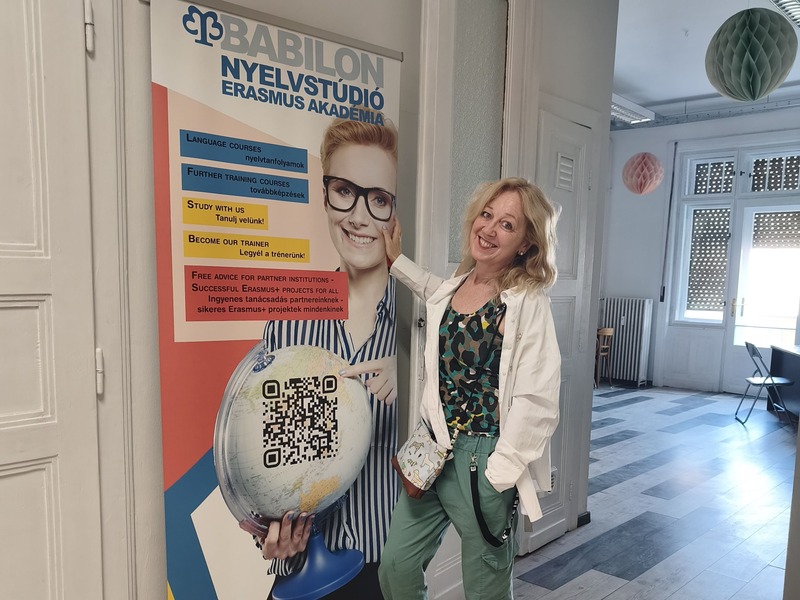
Erasmus+ in Budapest was the latest international experience for Irene Espriu, a teacher at Monlau ESOBAT. This summer, she took part in a training course on artificial intelligence, experiential learning and new educational methodologies.
The course, entitled ‘AI-Powered Experiential Learning in Budapest through History, Culture and Nature’, was taught by Viktor Koch at Babilon Erasmus Academy.
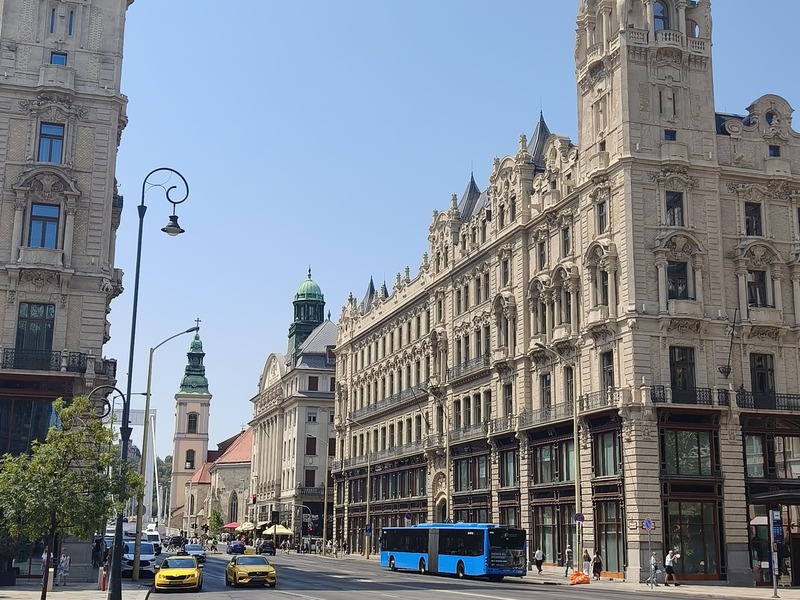
The course combined artificial intelligence, heritage, culture and activities in various locations around the city. For a few days, Budapest became an extension of the classroom.
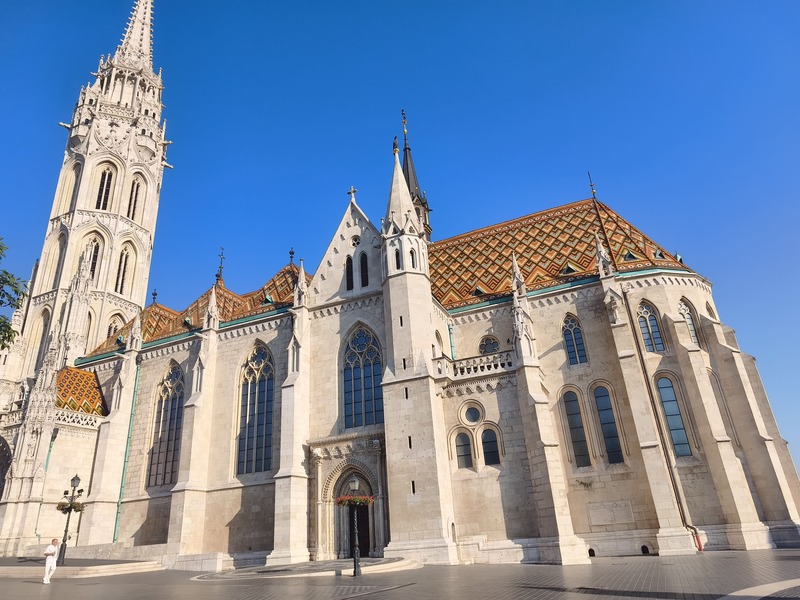
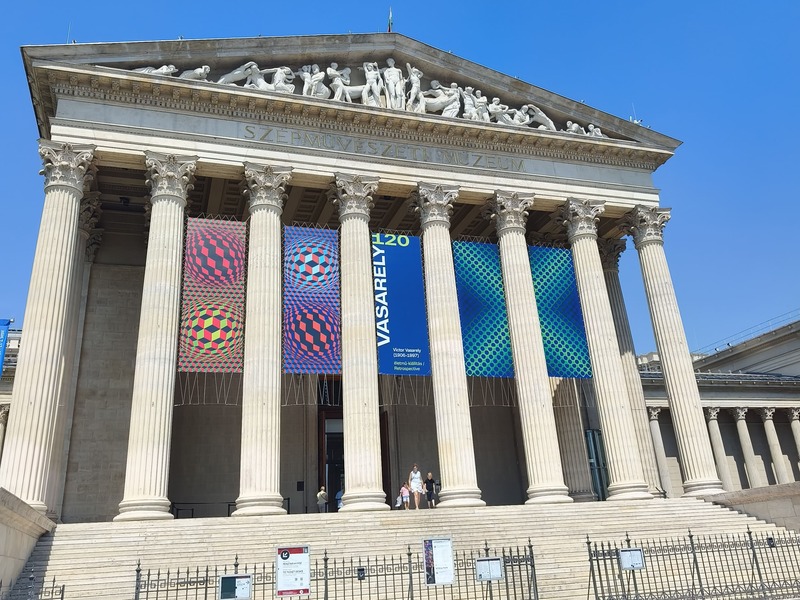
The Castle District, Matthias Church, Fisherman’s Bastion, the Museum of Ethnography, the Museum of Fine Arts, Margaret Island and the bridges over the Danube were some of the places she visited. There, Irene was able to explore, observe, experiment and create.
Beyond the tools she worked with, this experience gave her the opportunity to reflect on the role of artificial intelligence in education. For Irene, AI should not replace thinking. On the contrary, it can help to create more meaningful, critical and human learning experiences.
An Erasmus+ experience in educational innovation
The course demonstrated how to integrate artificial intelligence and digital tools into experiential learning programmes.
During the training, participants worked with tools such as ChatGPT, Gemini, Google Lens, Canva, GooseChase and Suno. All these tools were applied in real-life contexts relevant to their working environment.
However, Irene points out that the most important lesson was not discovering new tools. The most valuable aspect was reflecting on how and why to use them in the classroom.
This educational perspective is key. It enables us to use artificial intelligence in a way that makes pedagogical sense and prevents technology from becoming an end in itself.
Budapest as an extension of the classroom
One of the most rewarding aspects of this experience was using the city as a learning environment.
Budapest became an open-air classroom, where history, culture, architecture and nature served as a starting point for research and the generation of knowledge. This approach made it possible to link the subject matter to direct observation, teamwork and the interpretation of the environment.
Experiential learning is based precisely on this idea: learning through experience, through engagement with reality and through subsequent reflection. In this case, each place visited became an opportunity to ask questions, analyse information and develop new educational proposals.
In this way, the course demonstrated how the environment can become a highly valuable teaching resource when combined with a purposeful pedagogical approach and tools that broaden the scope for exploration.
Artificial intelligence in the classroom: more than just a tool
Artificial intelligence raises new questions for education.
Nowadays, a student can find an answer, generate a text or create an image in a matter of seconds. That is why the challenge for teachers is no longer simply to teach students how to find answers.
It is becoming increasingly important to help pupils ask good questions, verify information, spot errors and biases, put forward arguments and develop their own judgement.
In this context, the teacher’s role does not lose its importance. On the contrary, it becomes even more essential.
Technology can provide information and open up new creative possibilities. However, it is still the teacher who designs meaningful experiences, sparks curiosity and guides learning.
An activity to look at more closely
One of the most memorable experiences of the course took place at the Museum of Fine Arts, where the GooseChase tool was used to carry out an activity based on missions, observation and images modified using artificial intelligence.
Participants had to locate artworks, observe details, compare images, discuss as a team and make decisions. In this case, the technology made sense because it did not replace the experience, but rather helped them to look more closely.
This activity summarises one of the key ideas that Irene Espriu has taken away from the training course:
experience → curiosity → question → research → thought → creation
Artificial intelligence can accompany this journey, enrich it and open up new possibilities. However, it should not replace the process of observation, reflection and meaning-making that forms part of deep learning.
Education in the age of artificial intelligence
The Erasmus+ experience in Budapest raised new questions about the future of education and the role of artificial intelligence in the classroom.
Education in the age of AI does not mean competing with what a machine can do. Rather, it involves strengthening precisely those qualities that make us human: curiosity, judgement, creativity, the ability to connect ideas, communication, collaboration and critical thinking.
These skills are essential to ensure that pupils are not merely consumers of information, but active participants in their own learning.
From this perspective, technology can become an ally when it is integrated in a meaningful way, with clear objectives and an educational approach centred on the holistic development of pupils.
An international experience with an impact in the classroom
Irene Espriu’s participation in this Erasmus+ training programme reinforces Monlau ESOBAT’s commitment to educational innovation. It also highlights the importance of continuous professional development for teachers and international experiences.
Irene returns from Budapest with tools, resources and ideas that can be applied in the classroom. But, above all, she returns with new pedagogical questions.
Education in the age of artificial intelligence is not just about learning to use new technologies. It also involves guiding pupils to think more effectively, ask better questions and develop their own judgement.
As she herself points out following this experience:
“Perhaps education in the age of artificial intelligence will not be about competing with what a machine can do, but rather about reinforcing precisely what makes us human: curiosity, judgement, creativity, the ability to connect ideas, communication, collaboration and critical thinking.”
This is one of the most valuable insights Irene has taken away from Budapest. And she will now be able to apply it to her teaching practice at Monlau ESOBAT.